
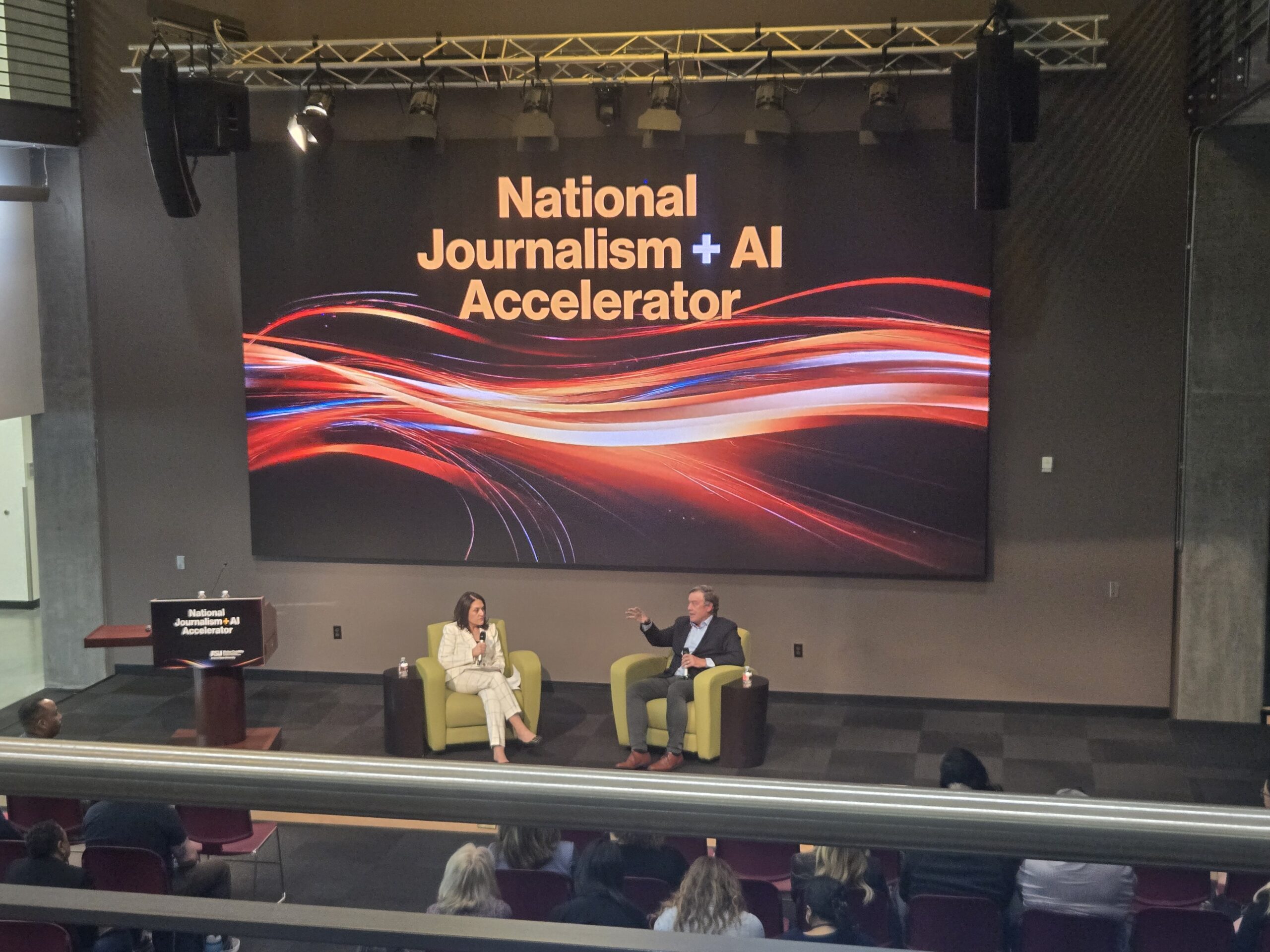
From Jan. 6-8, Dr. Dhiman Chattopadhyay, associate professor in the Department of Communication, Journalism, and Media (CJM), was invited to attend a selective three-day “Journalism + AI Accelerator” conference at Arizona State University.
The conference gathered 100 leaders across media, technology, medicine, academia and other industries to ethically integrate artificial intelligence into various industries, including newsrooms, classrooms and universities in a manner that is practical and ethical. Notable sponsors of the event were the Knight Foundation and the Walter Cronkite School at ASU.
Chattopadhyay was invited to attend after a nomination by a colleague at the University of North Carolina at Chapel Hill. He was one of approximately 25 professors across the nation to attend the event. Some other attendees included the chief technology officer of Microsoft, senior editors from the New York Times and the Washington Post, Amazon executives, scientists and clinicians who discussed the tangible benefits of integrating AI into their workplaces.
Chattopadhyay described how several university leaders mentioned how their institutions had adopted AI tools for admissions screening, student services, classrooms and at multiple levels of administrative work. He shared how models can filter applicants who meet the baseline requirements, while still having admissions professionals review the models for efficiency and accuracy. AI models can also be used to manage advising without exposing institutional data.
ASU’s Walter Cronkite School, which hosted the summit, included its Dreamscape Labs virtual-reality lessons, where they showed how immersive tools can engage students across majors and disciplines. Chattopadhyay described a VR chemistry scenario where participants worked to stabilize stranded astronauts by combining elements in a simulated environment.
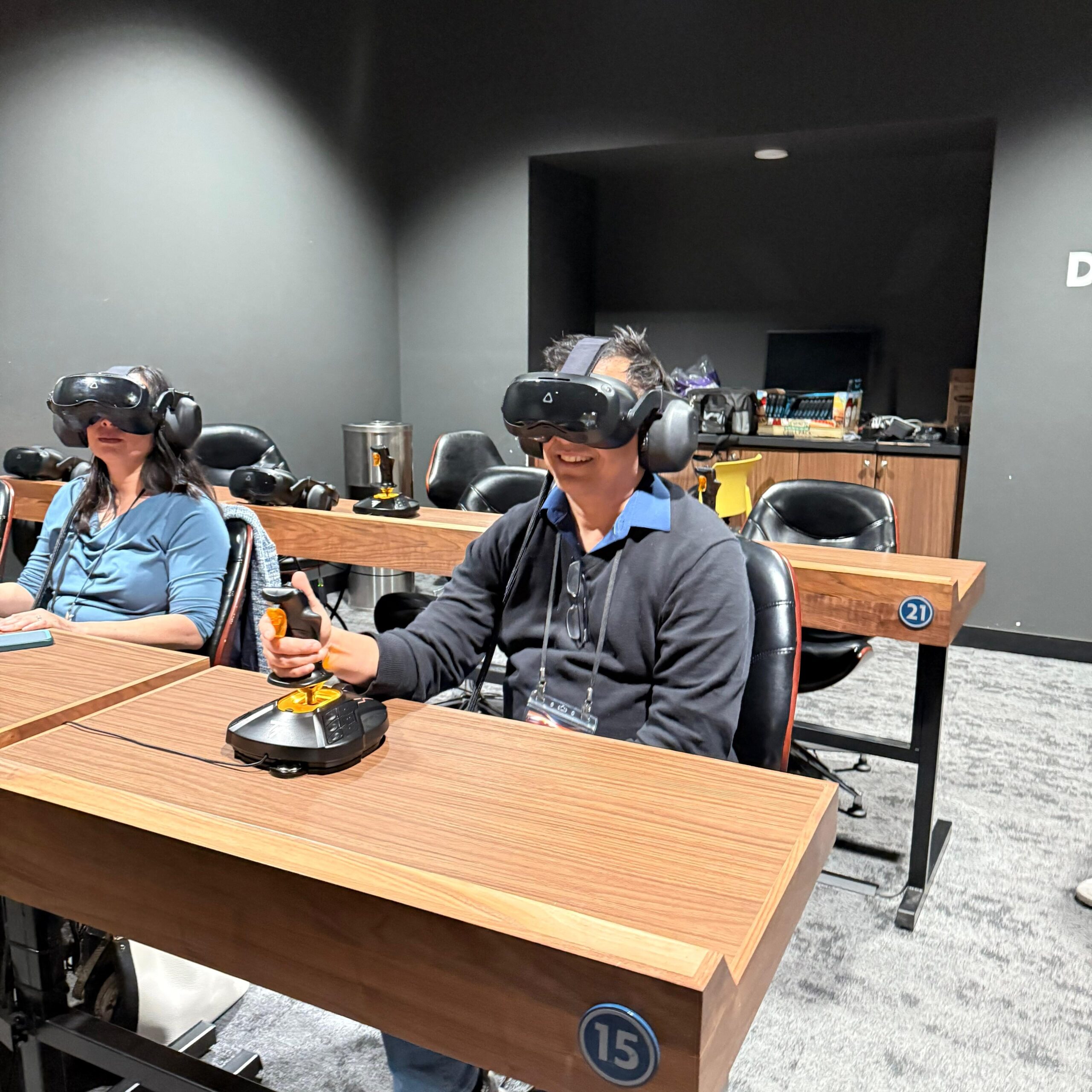
“Universities in PA and beyond have started using Meta Quest headsets to teach environmental science, biology, chemistry, history and journalism,” said Chattopadhyay. Some examples include utilizing headsets to simulate reporting at major sporting events, navigating complex engineering problems or experiencing the battlefields of World War II to understand why certain decisions were made.
Based on the experiences and knowledge that Chattopadhyay gained during the ASU conference, he has introduced five Meta Quest headsets to his sports journalism class this semester. These headsets will allow students to “be inside the game” and write feature pieces that are based on real-world experiences. He is also teaching a new course titled “AI in News and Culture,” attracting students from a wide range of majors to explore the “opportunities, challenges and ethical decisions” when using AI tools.
Chattopadhyay said he attended the conference with skepticism but left convinced that educators must teach students how to ethically and productively use AI rather than prohibit its use.
Panelists discussed “model hallucinations,” when a language model lacks up-to-date information and invents data. Chattopadhyay warned that an outdated model can “output correct answers from 2025 and start hallucinating from 2026,” emphasizing the need for continuous retraining and verification.
Throughout the conference, Chattopadhyay said, conversations were cautious but constructive. “The focus was, how do we best utilize these tools?” not “how do you put a stop to it?”
For Chattopadhyay, the message he took from the experience was that it’s important to teach students how to ethically use AI and preserve human judgment, skills that faculty at the event argued will make graduates harder to replace and better prepared for the ever-changing workforce.
Moving forward, with five Meta Quest headsets and a “AI in News Culture” course, Chattopadhyay is excited to provide students with hands-on experience using AI responsibly and in a manner that helps them thrive in their future careers.
Learn more about the event: https://news.asu.edu/20251031-local-national-and-global-affairs-asu-host-inaugural-journalism-and-ai-accelerator
