

For more than three years, students and faculty of the Department of History and Geography and Earth Science have been working with the members of the Brownsville Church of God to preserve and honor the history of the Brownsville community and its historic cemetery in Greene Township, Franklin County.
On August 17, 2026, the Brownsville Church of God announced in a press release that the National Park Service named Brownsville to the National Underground Railroad Network to Freedom. Additionally, the Pennsylvania Historical and Museum Commission awarded the community a State Historical Marker in 2025.
Dr. Steven Burg, Shippensburg University professor of history, played an integral role in Brownsville becoming nationally recognized.
Burg and Applied History graduate students worked tirelessly to earn both honors. The projects are an ongoing partnership between the church, its cemetery committee, community members and Shippensburg’s History Department.
“It’s been a powerful experience for me and my students to work together with members of the Brownsville Church of God to bring this important story to light,” Burg shared. “We’re absolutely thrilled that both the National Park Service and the Commonwealth of Pennsylvania recognized Brownsville’s role in the Underground Railroad.”
Burg and his students uncovered a remarkable story about the founding of Brownsville. The community’s history began in the 1820s with William “Batavia” Brown, an enslaved man who had been kidnapped from Indonesia and who was then taken to Baltimore to be sold. There he encountered a group of Franklin County farmers who helped Brown escape and brought him to the area.
Brown and his wife, Rachel, settled at the base of South Mountain and raised a large family. Over time, other formerly enslaved people joined them in Brownsville, which was also known locally as ‘Africa’.
Brownsville also became connected to Thaddeus Stevens’ Caledonia Iron Works, which opened in 1837. Stevens was an abolitionist and strong proponent of African American rights. The iron works provided jobs for many Brownsville residents until 1863, when Confederate forces destroyed the facility during the Civil War [on their way to Gettysburg].
By the 1840s, Brownsville had become a station on the Underground Railroad. Residents worked with antislavery advocates, including Robert Black and William Hammett, the superintendent of Caledonia Iron Works. Hiram Wertz, whose family lived in Quincy Township, later recounted guiding an estimated 45 to 50 freedom seekers to Brownsville.
Since the Underground Railroad was kept a secret, documenting its history required extensive research. Burg said his students had to compare local traditions, archival material, newspaper accounts and recollections to established historical records.
The cemetery of the Brownsville Church of God contains the remains of Brownsville residents who served in the United States Colored Troops during the Civil War, along with other community members and veterans.
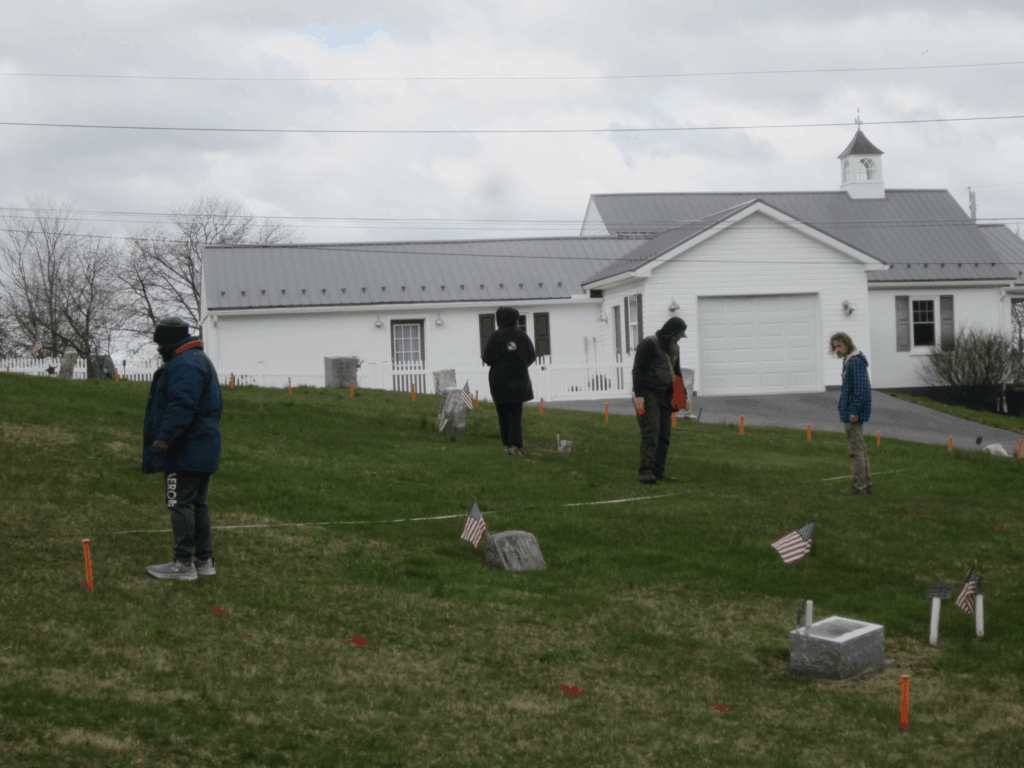
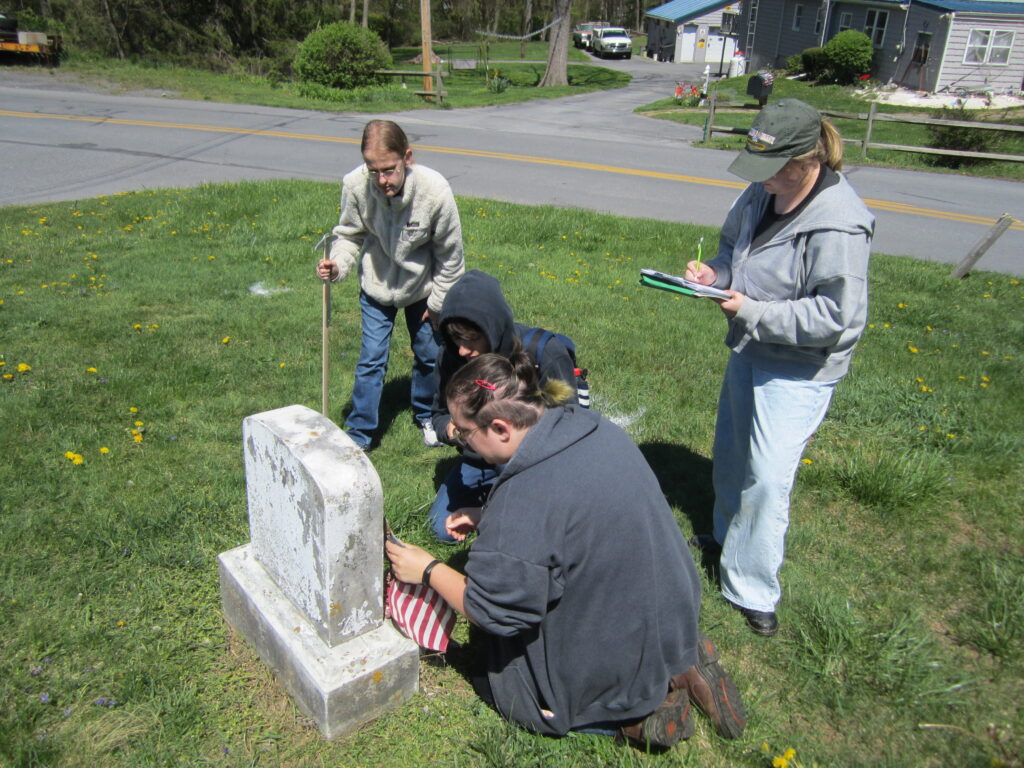
Research began in 2023, when Burg connected with the church’s cemetery committee. Students searched archives and newspapers, gathered information about people buried in the cemetery, conducted oral history interviews, and completed hands-on fieldwork.
During the spring 2025 semester, Applied History graduate students Dominic Curcio, Sierra Colross, Steven Guthrie and Erin Murphy wrote the PHMC historical-marker application as part of History 601: Community History Research and Practice. Also, grad students Dean Wick and Curcio worked on the Underground Railroad Network to Freedom nomination. It gave them practical experience working with state and federal public history agencies.
Furthermore, students used remote sensing to locate and map unmarked graves. Dr. Joseph Zume’s GEO 469: Applied geophysical imaging class helped identify numerous unmarked graves in the cemetery. Students Hunter Logan, Tom Bloss, Shane Billings, Kaylee Becker-George and Jack Tobey worked on developing a cemetery walking tour.
The partnership required students to not only prepare detailed documentation for the National Park Service but also present their work to the Brownsville community. Shawn Peno, Jayla Willard, Baz Jecha and Guthrie joined Burg during a worship service at the Brownsville Church of God, where they presented their findings.
Even though the congregation was moved to its current location on Lincoln Highway East in 2015, the church’s historic cemetery remains on its original site on Brownsville Road. A dedication ceremony is being planned to celebrate the two designations in spring 2027.
The church is also launching a campaign to restore and preserve the cemetery. These plans include new signage, a new fence, permanent markers for unmarked burial sites and educational programming.
Burg noted that a major goal of the project is to ensure that the remarkable history of Brownsville is better known to help ensure the site’s history is preserved.
“The things that get preserved are the things that people care about,” he said. “By connecting Brownsville, the historic cemetery, to this larger story, I hope that it will
heighten the importance of both the cemetery and also help to safeguard it going forward into the future.”
For those interested in Historic Preservation, check out the Center for Applied History.
