
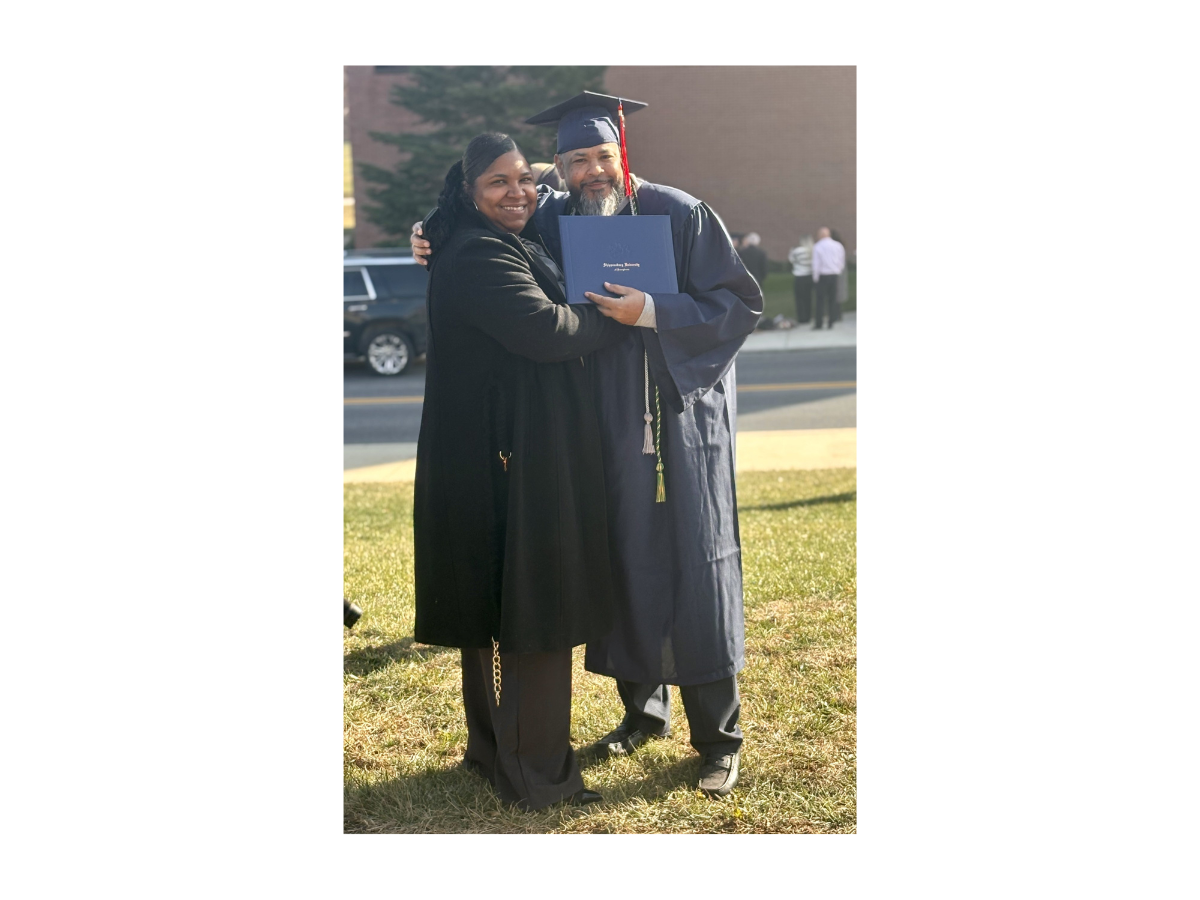
“By sharing my lived experiences, I contributed to a more inclusive and empathetic learning environment, one that recognizes the value of diverse life paths and the strength that comes from resilience and determination,” said Robert Taylor.
Robert Taylor, who graduated this past winter with a Bachelor of Social Work from Ship, is now making a difference in the lives of others as a counselor at the Daystar Center for Spiritual Recovery, an inpatient residential treatment facility.
Taylor’s path to graduation did not follow what many consider to be the “traditional” timeline. He started his social work career at Daystar in 2017, joining the team as a part-time certified recovery specialist. His hard work and dedication eventually led to a promotion as an assistant counselor, and later on, he was promoted again to his current role. While working, he earned his associate’s degree from Harrisburg Area Community College (HACC) in 2022.
“As a former nontraditional student, I believe my experience brought a valuable perspective and depth to the university. Coming back to school later in life, often balancing responsibilities such as work, family and community involvement, I was able to offer real-world insights and a level of maturity that helped broaden classroom discussions and group work,” Taylor said.
He credits much of his academic success to the faculty in the social work department, who he says helped him gain the necessary tools to thrive as a counselor. Taylor was also a member of the Ship cohort program, which left a profound impact on him.
“I had the privilege of connecting with a group of passionate and driven individuals, many of whom I believe will go on to make a meaningful impact in the field. We continue to stay in contact and serve as professional resources for one another, collaborating across the community to better support the clients we serve,” Taylor said.
Taylor believes that being a nontraditional student on campus helped broaden what it means to be a college student. “As someone who has overcome personal and systemic challenges to pursue higher education, I believe my presence helped challenge stereotypes and expand the definition of what a college student looks like.”
For other nontraditional students considering a return to school, Taylor encourages them to take the leap. His story is a testament to the university’s commitment to creating a more accessible learning experience for students across all ages and stages of life.
