

“The mobility of the drones in the use of emergency services is incredible,” said Officer Jeffrey (Jeff) Shubert, a patrol officer for the Shippensburg University Police Department (SUPD).
Shubert also serves as a certified drone pilot and member of the Cumberland County Emergency Drone Team. He plays a critical role in emergency response throughout the region.
His journey with drones began as a hobby. “I bought a toy drone and started flying it around the house, learning how to control it,” Shubert said. Now, he operates drones with advanced capabilities. He holds a Part 107 certification from the Federal Aviation Administration (FAA), which allows him to fly drones commercially, including for emergency operations and aerial images.
“To be certified, you have to take a 60-question test, which the FAA regulates,” said Shubert, who took his exam at a certified testing site in Hagerstown. “You have to get an 80 percent to pass.”
Drone hobbyists are able to fly recreationally without a certification, but for anyone using drones in commercial or public safety, the FAA requires certification, especially when publishing drone footage for media purposes. “When you start taking pictures and you put them on social media, you have to be Part 107 certified, because you are operating in FAA airspace,” he said.
Shubert’s work with drones has left an impact on the community. Most recently, he supported firefighters during the Michaux State Forest wildfires.
“The command center needed aerial photos of where the fire was going and spreading, so our team responded,” said Shubert. “Half of us got called away to the King Gap fire because they had firefighters surrounded. The commander of our drone team requested that I go back and get my personal drone.”
He used his drone to help officials track the fire’s progression and locate personnel. In addition to emergency response, Shubert also supports events and safety operations on campus.
“ I used my drone at the request of Sergeant Ward and Chief Taylor during the state track meet,” said Shubert. His drone provided images that were used to inform crowd and traffic planning, which allowed SUPD to efficiently prepare for overflow parking and eliminate stress for visitors.
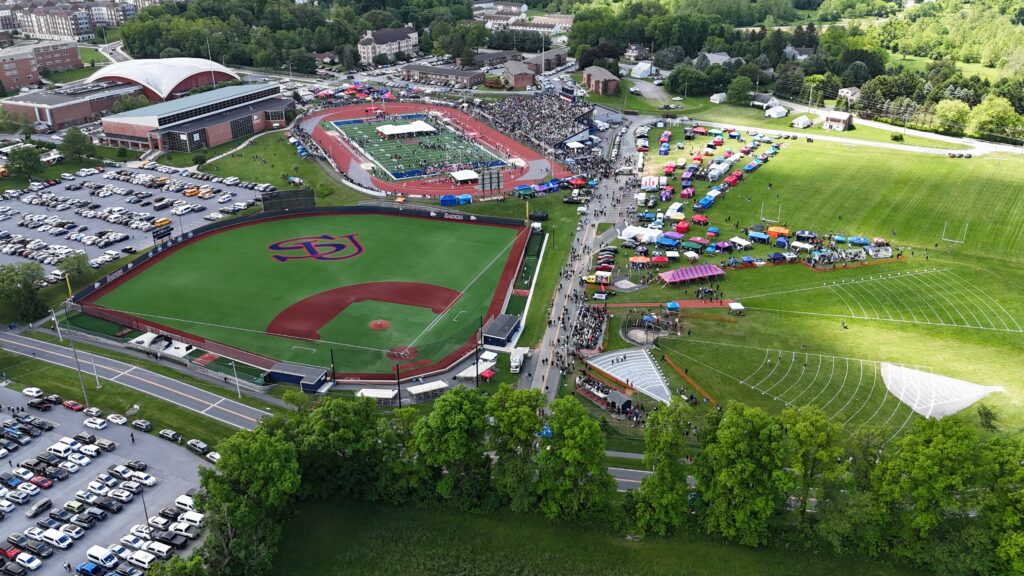
Shubert also emphasized the positive role drones play in public safety. “Right now, some people have a negative perception of drones because of what they see in the news,” he said. He acknowledged that while there are people who use drones irresponsibly, the majority of drone pilots are trustworthy. Modern drone technology has made impressive advancements, such as zoom, night vision and GPS tracking that allows drones to follow moving subjects and drop aid supplies. “We can drop a pin on a missing person, and that will give us coordinates, and that way the ground crew can track them,” Shubert explained.
Some drones that have the future potential to be used by the county team include speakers for remote communication during crises. “That’s one way that a crisis intervention officer can interact with a person in crisis on the ground through the use of the drone, said Shubert.
As drone technology continues to evolve and integrate artificial intelligence (A.I.), 3D mapping and advanced sensor systems, Shubert hopes to see these life-saving features continue to grow.
“We’re putting $10,000 drones in the air that we can just drop down, swap a battery out and put it right back in the air,” he said, proving how impressive and accessible modern drone technology is.
For Officer Shubert, drones are one of the many ways that the university and the county can keep the community safe and prepared for emergencies.
