

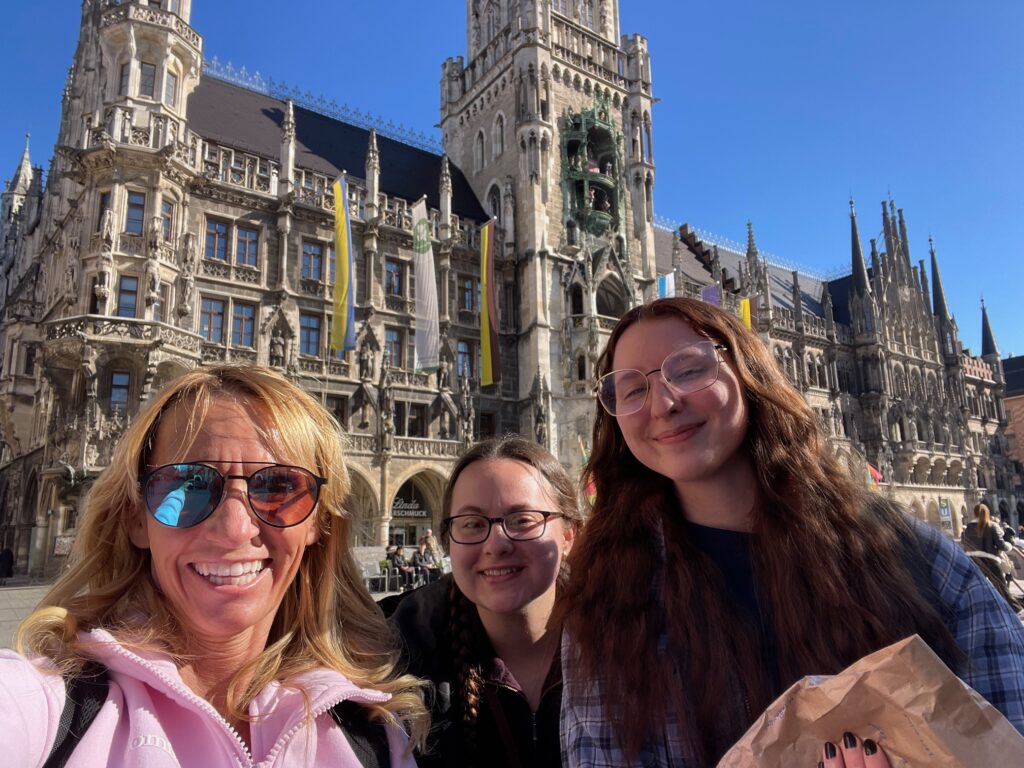
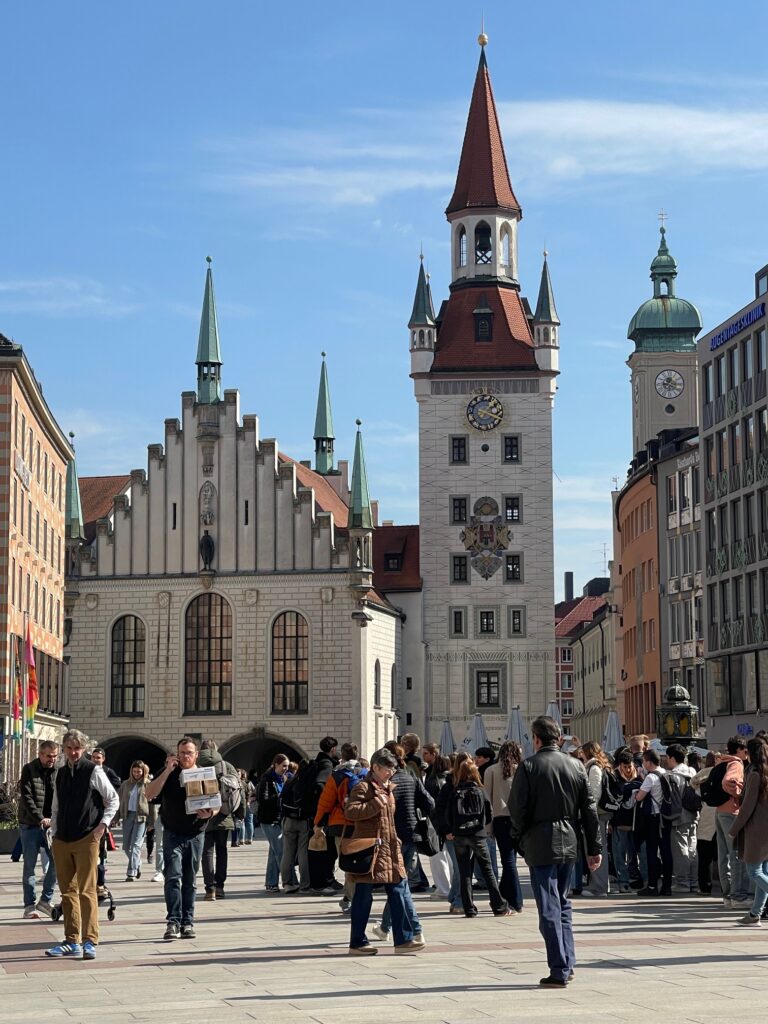
Over Spring break, Dr. Alison Feeney, Chair of the Department of Geography & Earth Science, and Dr. David Wildermuth, Professor of the Department of Global Languages & Culture, led a study abroad trip through Germany, Austria and Czechia. Students crossed borders from Munich to Salzburg, České Budějovice, Plzeň, Bamberg and several other cities, where they fully immersed themselves in geographic research and the culture of each region. “Teaching GERM 190 and GEO 490 shaped the trip by making it much more than a travel experience, but rather a deliberate academic field course,” said Feeney.
GERM 190, General Education Special Topics specific to Germany, provided cultural and linguistic knowledge. Wildermuth helped students understand beer as a cultural identity that’s integrated into place and everyday life in Germany, Austria and Czechia. Students prepared with readings, journal articles and quizzes that introduced beer history, regional identities, water chemistry, etc. GEOG 490, Selected Topics in Germany, had students dive deep into research on independent topics, geographic comparison, synthesis, writing and presentation.
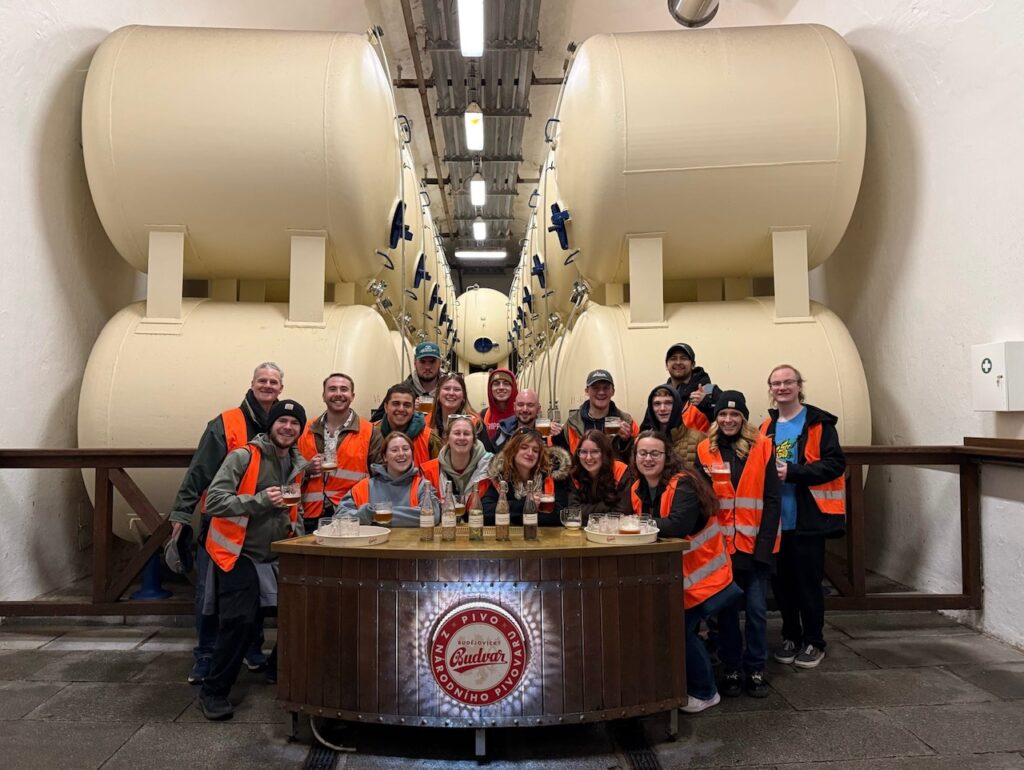
The trip itinerary was intentionally crafted. Bavaria created discussions about identity, style and cuisine; Austria emphasized cultural tourism, religion and landscape; Czechia gave students a deep dive into the history of pilsner and lager. In Munich, Salzburg, České Budějovice and Plzeň, students went on brewery tours that “illustrated how one product can become tied to national identity, international reputation, and industrial development,” according to Feeney.
For students who were interested in culture and language, walking tours, cathedral and old-town visit, as well as everyday interaction revealed how beer operates within broader social practices. In Bamberg, the medieval atmosphere, cathedral heritage and distinctive smoked beers at Schlenkerla provided students with an overview of how brewing practices are preserved within local identity and historical landscapes.

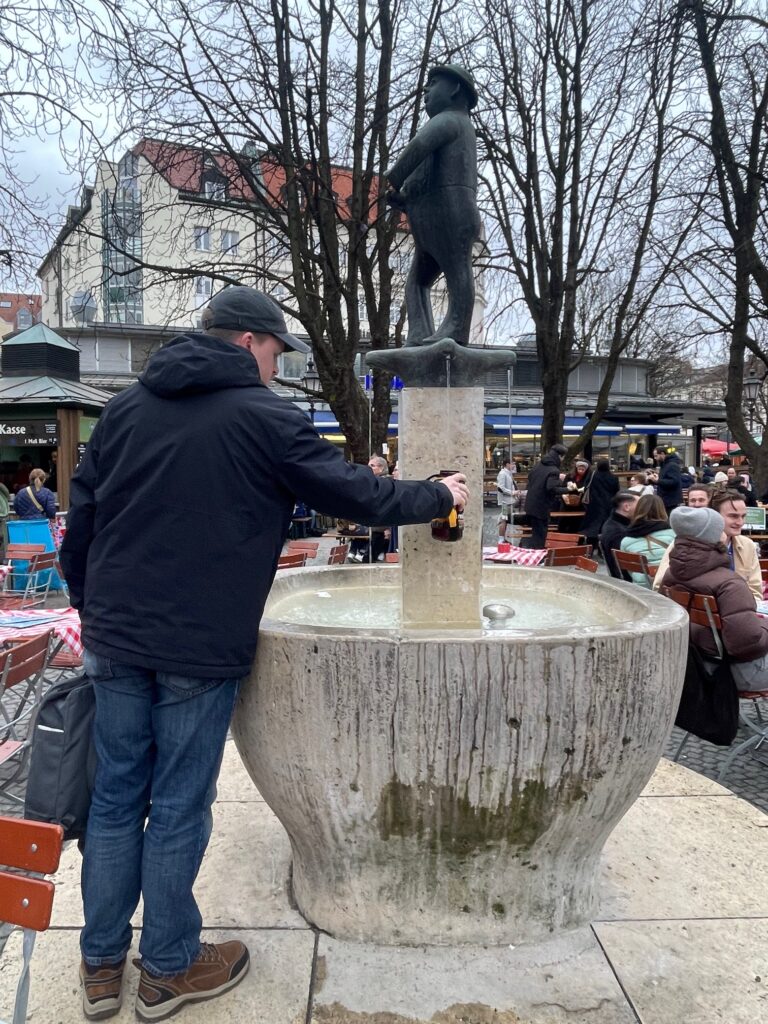
Students were assigned to arrive with research questions prepared in advance and related to their majors. Each student selected an individual topic and summarized peer-reviewed journal articles during the semester, and kept personal journals to document their expectations, observations, conduct comparative analysis and personal synthesis. This method led to individualized research projects that connected transportation and drinking culture, brewing chemistry, environmental sustainability, purity laws and political economy, hops and terroir, marketing and national identity to real-world observations.
After the trip, students returned to campus to conduct presentations on their findings. The 2026 Minds at Work Conference, held on April 28 from 3:30 pm to 8 pm at the CUB, showcases the learning that students gained before taking off to Europe, onsite field observations and the reflections they made upon returning to campus. To learn more about the findings and research on students’ journeys through Germany, Austria and Czechia, be sure to attend this year’s event.
Minds at Work features a wide variety of posters and presentations across the sciences and liberal arts. To learn more, read the 2026 Conference Program.
