
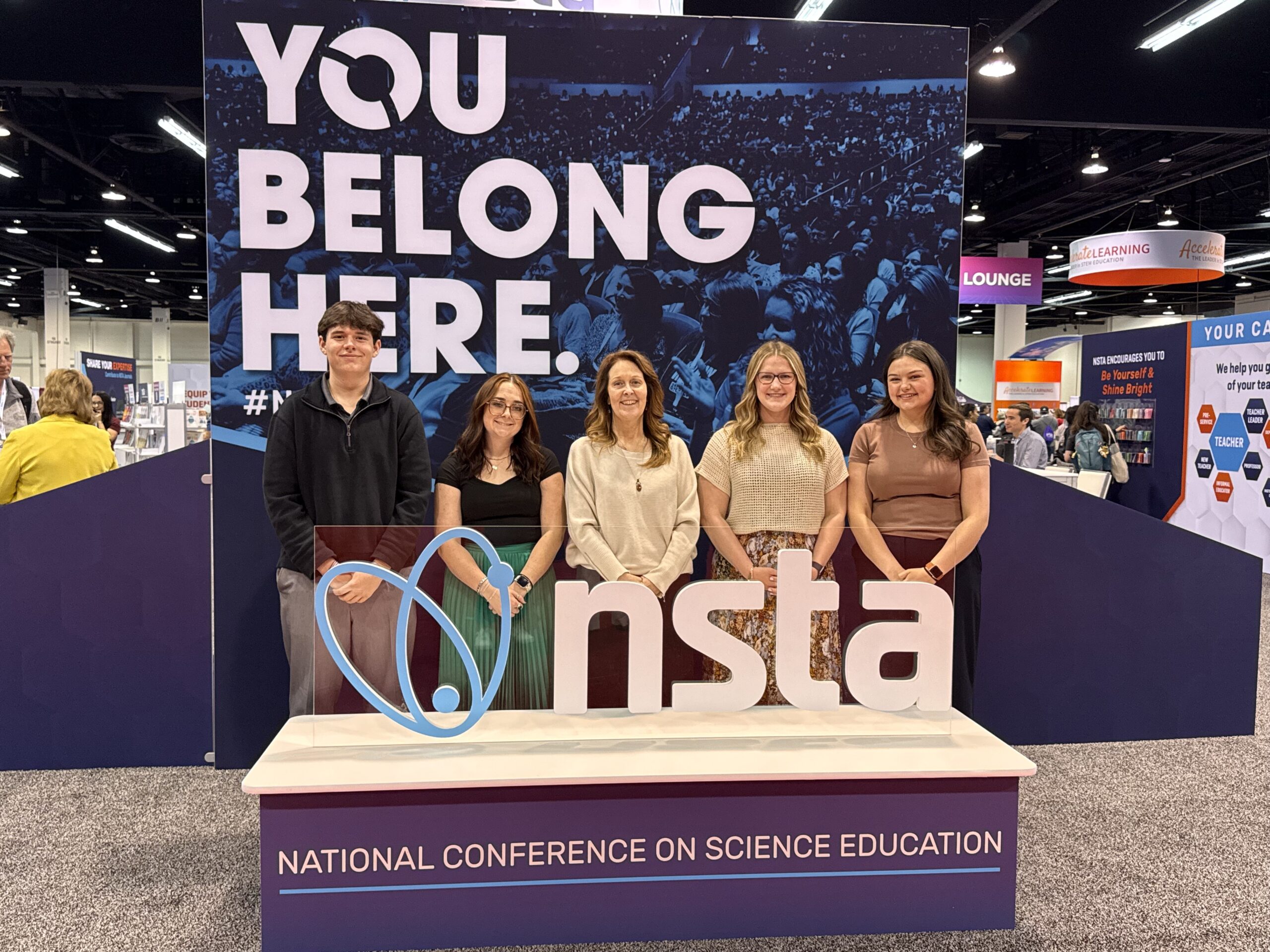
April 15-18, Dr.Christine Royce, professor in the Department of Teacher Education, and Shippensburg students Laci Hoover, Jeremy Gruver, Faith Small and Ashley Hepler, attended the National Science Teaching Association (NSTA) spring conference in Anaheim, California, one of the largest gatherings of science educators in the world.
The group of students not only participated as attendees, but also as contributors to the association’s media outreach efforts. The opportunity arose after students attended a previous conference with Royce in the fall, where an NSTA representative invited them to the spring conference.
In the fall, the director of MarCom at NSTA met Royce’s students, and they discussed media outreach opportunities. “Kate from NSTA offered them pre-registration for the spring conference in exchange for their help with social media campaigns, blogs and a podcast that broadcasts the voices of young teachers – something that has never been done before by the NSTA.”
Throughout the four-day conference, Hoover, Gruver, Small and Hepler contributed to social media coverage, interviewed attendees and documented their experiences as pre-service teachers. Royce worked closely with the students during the event to coordinate responsibilities and directly connected them with educational professionals.

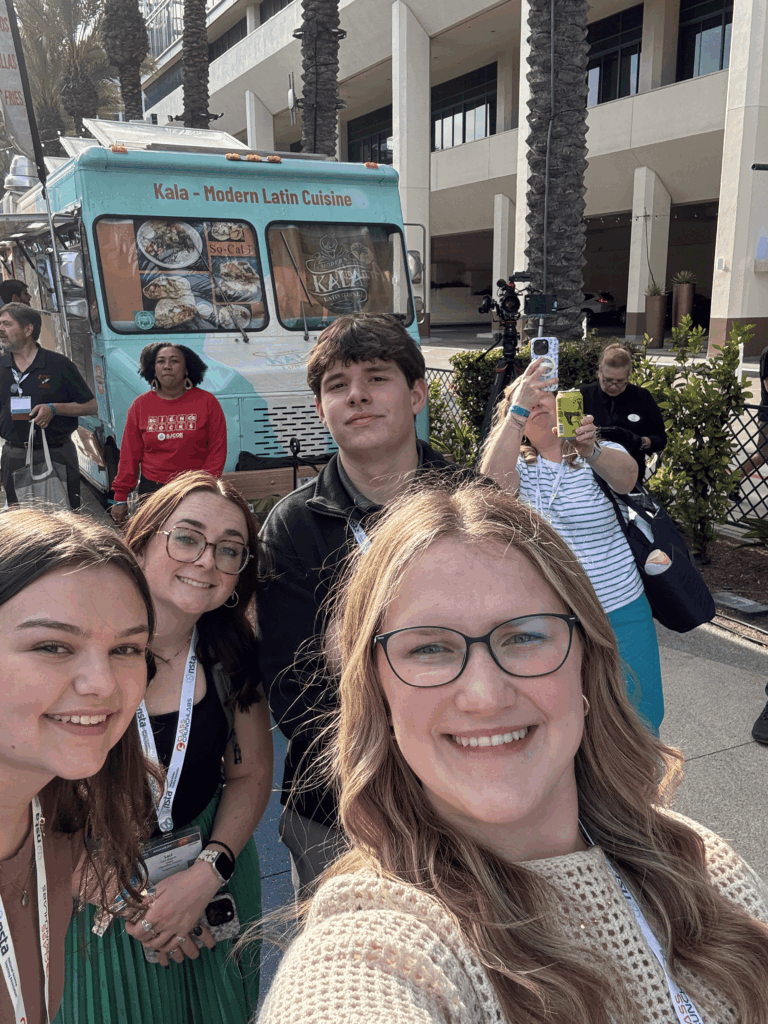
“Many of the sessions focused on hands-on learning, inquiry-based instruction and making science relevant to students’ everyday lives,” Hoover said. “It also showed me how important it is to build curiosity and allow students to actively explore, instead of only learning through lecture.”
Hoover and Hepler participated in an Instagram takeover for NSTA during the conference, where they shared updates from the sessions, the exhibit hall and the overall experience with followers. Both students said exploring the conference expo hall was one of the highlights of the event.
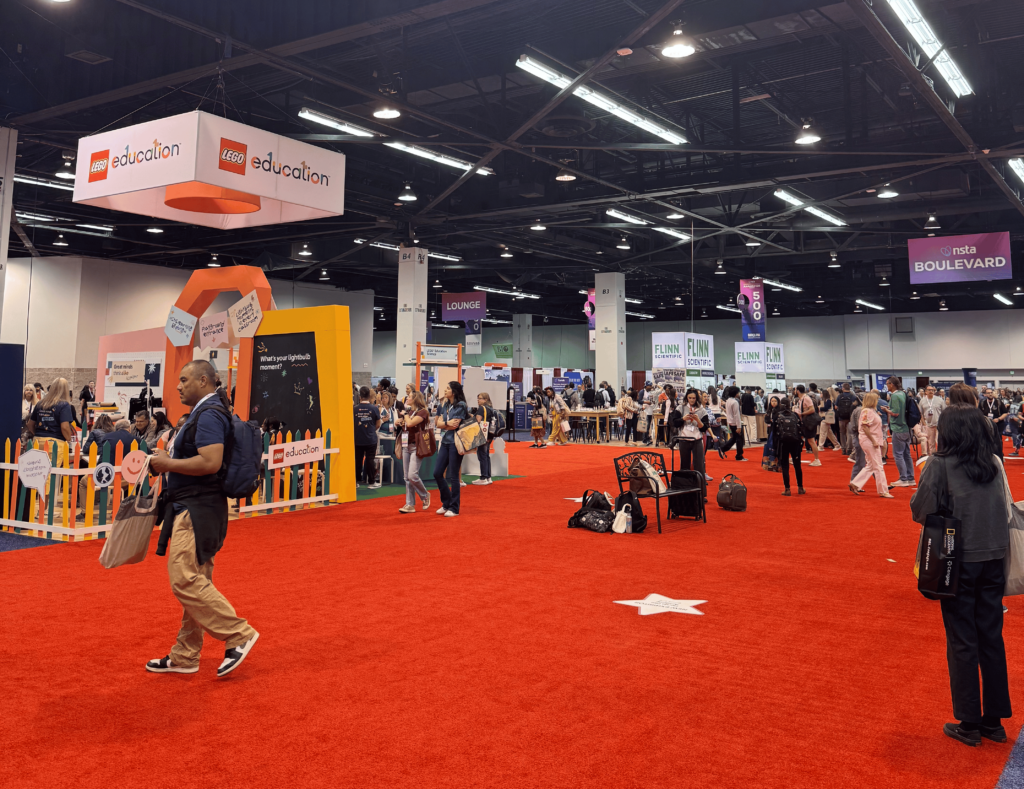
“One of the most valuable parts of the conference was exploring the expo hall and attending sessions focused on hands-on science instruction and student engagement,” said Hepler. “I especially enjoyed learning about resources and activities that encourage collaboration, creativity and problem-solving in the classroom.”
Small, who worked on a blog post for NSTA, shared that the conference expanded her understanding of how science education can motivate students to continue learning beyond the classroom.
“The networking opportunities with current science educators and enthusiasts were both energizing and inspiring,” Small said. “I was reminded of the sense of curiosity and excitement that science fosters in learners of all ages.”
Small also said the conference introduced her to organizations and resources that support student programming. While visiting the exhibit hall, she connected with representatives from notable organizations, including National Geographic and the World Wildlife Fund.
In March, Smith was offered a position as a fifth-grade ELA teacher. “To maintain and integrate my enthusiasm for science, particularly environmental and sustainability topics, I plan to establish an after-school sustainability club”, said Smith.
For Gruver, one of the most memorable aspects of the conference was connecting with educators facing similar challenges in the classroom.
“Everyone who attended the conference loves science and wants to create a better way to teach science to all different ages,” Gruver said. “I got to see and hear so many new ideas and talk with people whom I may have never met otherwise.”
One session that stood out the most to Gruver involved using hands-on forensic techniques to identify bear DNA during a simulated investigation. “It was an exciting session that focused on mixing both fun content with actual concepts that make it easier for students to be engaged and learn the material.”
He added that today’s middle school educators face the increasing pressure to keep students engaged in a world that’s filled with constant digital distractions. “We as science teachers, and teachers in general, have to be able to make our classrooms entertaining enough that we’re a fun place to be and learn,” Gruver said.
All four students joined NSTA as a part of their science methods coursework and are preparing to become certified middle school science teachers. Their involvement at the national conference provided them with both professional development and real-world experiences, while also reinforcing the important role that science teachers play in educating future generations.
