

Shippensburg University students spent the summer completing complex and detailed research. From analyzing wireless communication systems to exploring potential cancer treatments, the Summer Undergraduate Research (SURE) program has enabled students to collaborate with faculty and mentors to uncover solutions to real-world problems and ideas.
SURE grants are highly competitive and allow undergraduate students to collaborate with faculty across various departments to conduct in-depth research. The program ensures students gain hands-on research experience, professional development skills and in many cases, they have the opportunity to present and publish their findings.
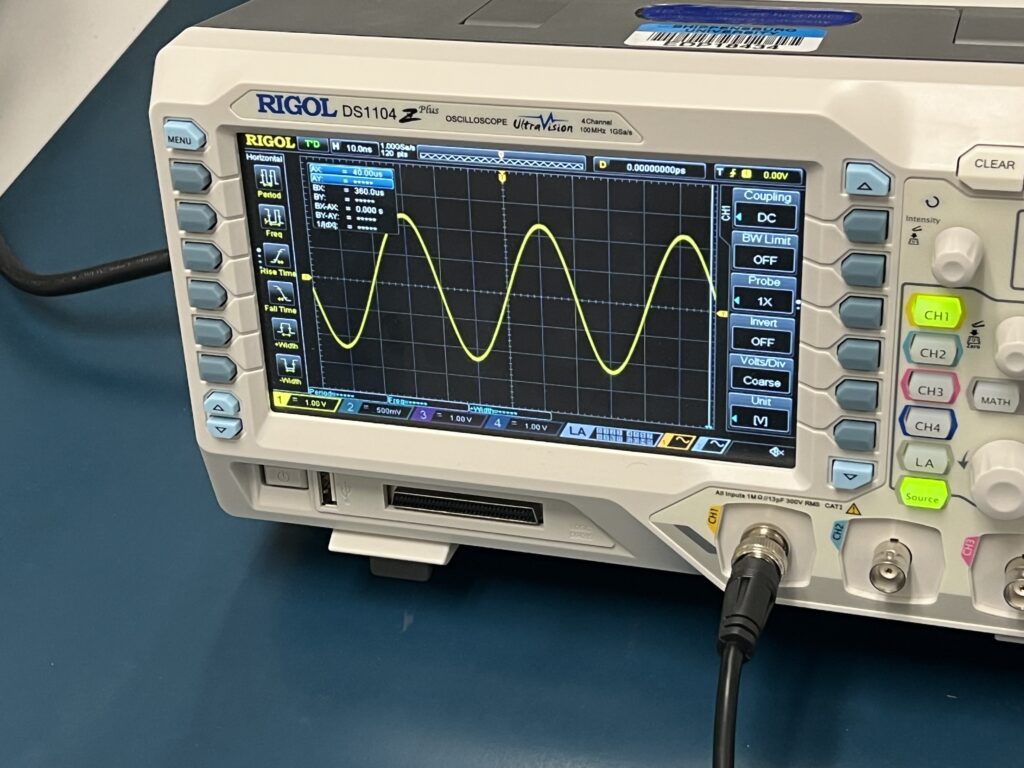
Implementation of a 2×2 MIMO Testbed
Electrical engineering student Trynx Rutledge and Dr. Sangkok Lee developed a testbed to study Multiple-Input-Multiple-Output (MIMO) wireless communication systems, using multiple antennas to increase data transmission capacity. The project started as a simple single-antenna system, eventually becoming configured with additional antennas to allow for faster and more reliable communication, without increasing power.
Modeling Emissions of Criteria Pollutants from the Warehousing Industry in Cumberland Counties, Pennsylvania
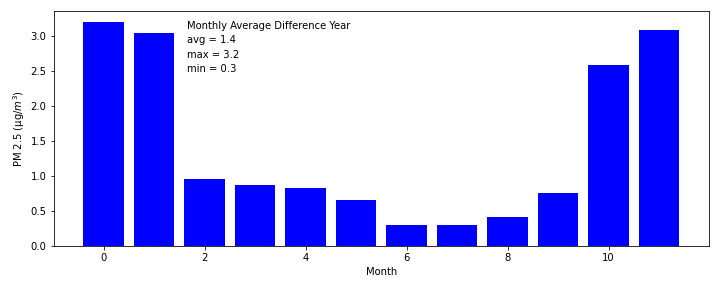
Geography major Grace Coffman and Dr. Timothy Hawkins compiled an inventory of 200 warehouses across Cumberland and Franklin counties dating back to 1988. The research tracked a significant increase in warehouse size, from an average of 7.67 acres in 2004 to over 20 acres in 2022. This increase has been linked to higher PM2.5 air pollution levels throughout the region.
“We theorize this is likely because of high-pressure weather systems and temperature inversions,” Coffman said. “Since the valley experiences higher PM2.5 levels, it can lead to more hospitalizations of people with preexisting conditions, such as asthma.”
Validity of Cross-National Poverty Measurement
Sociology major David Boatwright, Dr. Lawrence Eppard and Dr. Thomas Hatvany worked together to compare relative and absolute measures of poverty worldwide. Their results revealed that relative measures can misleadingly show poorer countries outperforming wealthy ones.
Their findings showed that “skepticism about the relative measure is warranted,” meaning that absolute measurements are much more reliable for assessing cross-national poverty comparisons.
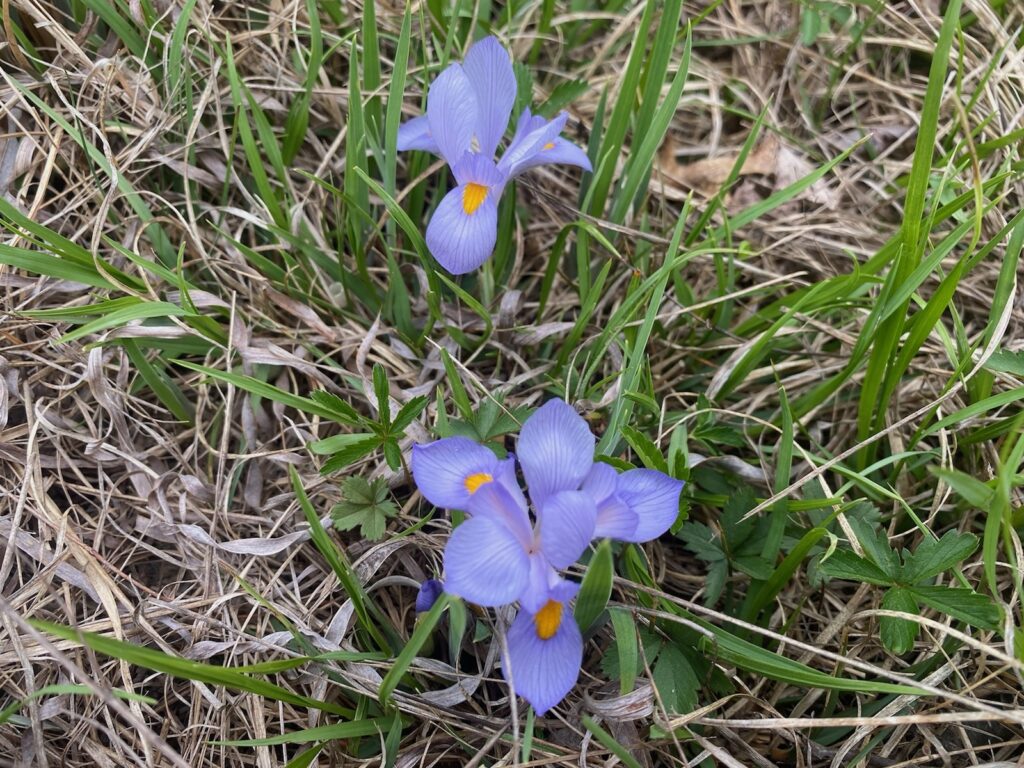
Reproductive Biology of Dwarf Iris (Iris verna)
Dr. Heather Sahil and students Ryan Haskins and Ashley Adelgren studied the reproduction of the endangered Iris verna. Through pollination experiments and insect observations in the Michaux State Forest, they investigated whether low amounts of pollen transfers limited seed production.
“This experience has given me an appreciation for the monotonous side of science because it seems to often be where experts are made,” Adelgren said. “In becoming familiar with the subject and its surroundings, in making thousands of little observations, you build the foundation to ask deeper questions, make relevant connections and notice abnormalities or changes.”
Writing Motherhood: Nature, Domesticity and Nontraditional Form in Ducks, Newburyport
English major Jenny Russell and Dr. Erica Gailoto to explore feminist and ecocritical themes in Lucy Ellmann’s novel: Ducks, Newburyport. Russell focused on analyzing the intersections of motherhood, environmental degradation, domestic life and how these intersections compare between humans and animals.
“I know that I want to get a graduate degree after completing my undergraduate studies, and working on this project has solidified that for me,” Russell said. “It’s given me something to feel passionate about in terms of a study focus.”
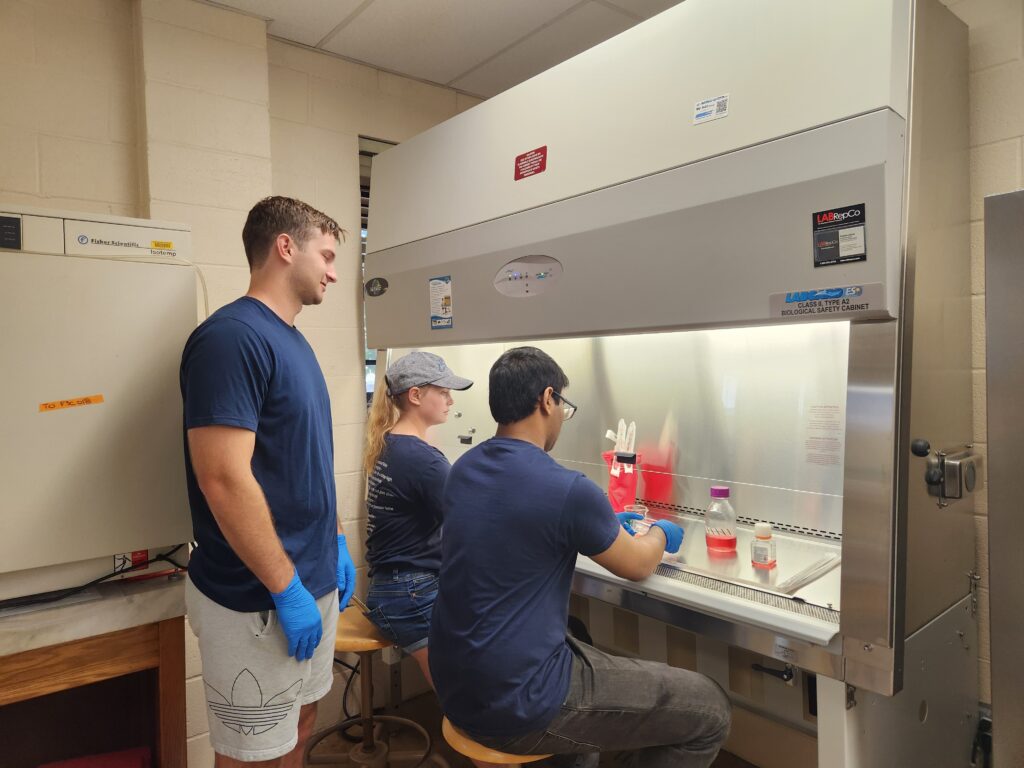
Selective Autophagy as a Mechanism to Control Cancer Cell Migration
Dr. Serri Bergsten and students Aryan Gaonkar, Aubrey McBride and Cameron Lyons studied selective autophagy (a cell recycling process) and how it relates to cancer cell migration. Using brain cancer cell lines, they tested the effects of various drugs to better understand how autophagy influences metastasis.
“As Ship, students pursuing further education in the health professions, we are grateful to have the opportunity to delve deeper into cancer research,” Gaonkar, McBride and Lyons write, noting that the project allowed them to practice advanced lab techniques that are often unavailable to undergrad students.
Assessment of Guardian Meal Decision Stressors Within a Summer Learning Program
Social work student Hallie Grenner assessed how free meals provided the the Shippensburg Community Resource Coalition’s summer learning program help to alleviate parents’ and guardians’ stress over meal planning and food insecurity. Through surveys and focus groups, Greener will explore the connections between food access, nutrition and the well-being of families.
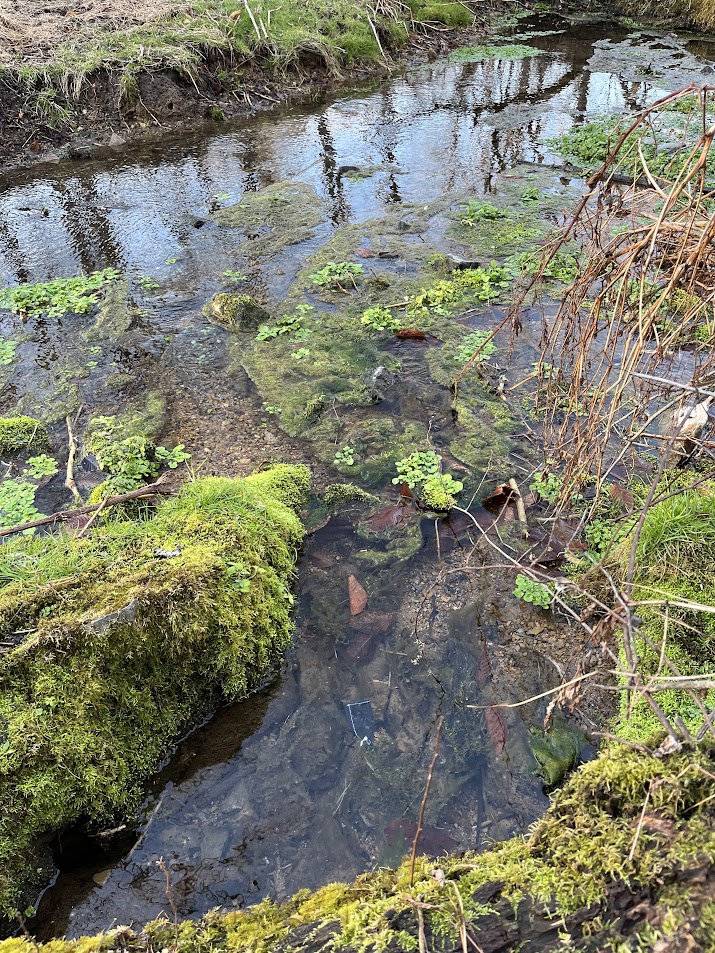
Source area delineation for the Letort and nearby Springs around Carlisle, Pennsylvania.
Dr. Todd Hurd and student Tanner Martson conducted dye tracing to map the sources of the Letort Spring Run and nearby springs. Hurd and Martson partnered with the Letort Regional Authority to study how groundwater from outside surface watersheds can feed limestone springs, and the implications of water management and conservation efforts.
Predicting Crohn’s Disease Using Machine Learning Classification Techniques
Computer science students Tom Gehman and Kaitlyn Zeigler worked with Dr. Jeonghwa Lee to test machine learning algorithms for predicting the risk of having Crohn’s disease using genetic data. Comparing models such as Random Forests, XGBoost and K Nearest Neighbors, their results were 90 percent accurate.
“Thanks to this research experience, we got to explore four unique ML algorithms in depth,” Gehman and Zeigler wrote. “It’s been a great learning opportunity and has provided a clear introduction into the process of conducting research.”
Building a Corpus of Texts and Teaching Approaches to Advance Personal Pedagogical Interests
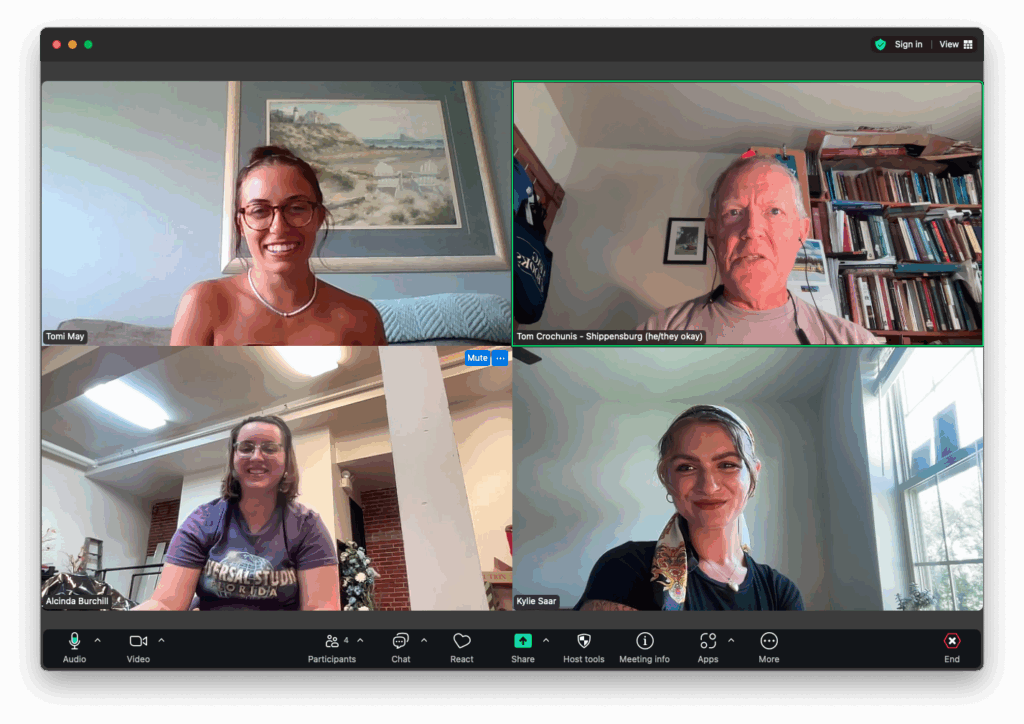
Dr. Thomas Crouchunis and secondary education majors Kylie Saar, Tomi May and Alcinda Burchill created a corpus of teaching materials and methods that cater to their specific interests. Saar is exploring how to implement empathy into teaching through the use of global literature, May is researching the use of informal writing exercises and Burchill is focusing on creative writing.
“We’re sort of co-teaching each other,” Crochunis said. “The shape of the work takes form through collaborative discussion and peer feedback.”
Each of the developed teaching materials and methods will support each student’s field placement and will also be used to enrich Crochunis’s Introduction to Interdisciplinary Arts course, which focuses on “insiders and outsiders,” and how to articulate an array of different media such as texts, plays, documentaries, graphic novels and student-created media.
In October, Saar, May and Burchill will present their work at the annual Pennsylvania Council of Teachers of English Language Arts (PCTELA) conference in Harrisburg.
GIS Mapping and Data Integration of Mixed-Use Nature Preserves in Lancaster County
Geoenvironmental science student Lauren (Ren) Wolford and Dr. Nathan Thomas collaborated with the Lancaster Conservancy to create management plans for over 50 nature preserves throughout the region. They helped develop a baseline document report and a current condition report for all of the preserves. Ren has also been working closely with SU’s Center for Land Use and Sustainability’s director, Holly Smith and GIS analyst Alfonso Yáñez to develop approximately 24 appendices to go along with each report, including 16 GIS-generated maps.
“Working on the Lancaster Conservancy project has been a valuable part of my growth as a student. It’s given me the chance to take what I’ve learned in the classroom and put it into practice through real-world work. I’ve gained hands-on experience, built stronger communication and teamwork skills and developed a better understanding of how my academic interests connect to real career paths. It’s helped me feel more prepared and confident stepping into professional settings,” Ren wrote.
Development of GC/MS-SIM Method to Quantitate Tetrodotoxin and Identifying the Molecular Mechanisms of Diabetic Retinopathy
Biochemistry majors Caitlin Smith and Landon Herzog spent this summer conducting advanced biochemical research under the guidance of Dr. Robin McCann. Smith researched the molecular mechanisms of diabetic retinopathy, while Herzog focused on detecting tetrodotoxin (a powerful toxin found in newts), using gas chromatography-mass spectrometry (GC-MS). — If you have a better source, or you can send me the abstract where I can link to the definition, please let me know.
One of the main components of Smith’s work involved cultivating kidney cells and mimicking diabetic cells to study the specific protein that causes blood and fluid leakage in the retina. “I’ve never worked with living cells before, so this was definitely outside my comfort zone,” said Smith. “But I’ve gained so much confidence, and I’m excited to apply what I’ve learned moving forward.”
Herzog’s research required him to isolate and quantify micro amounts of tetrodotoxin from newts. Despite the many challenges he faced, such as working with microliter measurements and learning how to use highly specialized software, this project has been an invaluable experience for him. “It’s been difficult but rewarding. This experience gave me early exposure to techniques that I’ll use throughout my career.”
McCann emphasized that, although the projects were under her guidance, Smith and Herzog are the ones doing most of the heavy lifting. “They work independently in the lab, and I step in as needed. It’s not just about collecting data, it’s also about learning how to troubleshoot, think critically and find solutions.”
Both projects will include poster presentations and continue as ongoing research. “These problems don’t get solved in one summer,” said McCann. “They take decades. Our students are contributing to a much larger scientific puzzle.”
From scientific and mechanical discoveries, literary analyses to reducing food insecurity, this year’s SURE projects emphasize the variety of research that undergraduate students have the opportunity to explore here at Ship — something that isn’t often granted to undergraduates. Students have the privilege of working alongside faculty and experts in their fields, allowing them to gain real-world research experience. The hard work of Ship students and professors demonstrates how research prepares students to take on challenges and create meaningful contributions to their chosen career paths.
