

Last week, Shippensburg University proudly served as one of the organizers for the inaugural Historic Preservation Workforce Summit, held in Harrisburg. The event brought together academic institutions, government agencies and private sectors to explore careers in archaeology, anthropology, public history and cultural resource management.
The summit was developed through a partnership between Ship, the Pennsylvania Historical and Museum Commission (PHMC), the Pennsylvania State Historic Preservation Office (PA SHPO) and Indiana University of Pennsylvania (IUP), with support from numerous organizations, including the Maryland Historical Trust, Preservation Pennsylvania and the National Conference of State Historic Preservation Officers (NCSHPO).
According to Allen Dieterich-Ward, director of the Graduate School and professor of history at Shippensburg University, the event originated from the university’s ongoing efforts to merge academic programs with workforce needs.
“One of my key strategic goals as the graduate director is to make sure that we are keeping all of our programs consistently aligned with employer needs,” said Dieterich-Ward. “Everything we do in the graduate school is really about helping our students to advance in their careers directly.”
Three years ago, Ship started focusing on holding workforce summits on sectors such as the natural sciences, leadership, public service, healthcare, history and more.
“What was exciting about this event was that, unlike our previous summits held on campus, we brought together participants from across Pennsylvania and beyond,” Dieterich-Ward expressed. “We had representation from 12 schools throughout the state and employers from the public, private and nonprofit sectors.”
The summit included sessions led by national and state experts, including representatives from NCSHPO and PA SHPO, as well as panels specifically discussing archaeology, anthropology, historic preservation and public history. These sessions highlighted the wide range of career options, from regulatory positions and community development to cultural resource management and environmental consulting.
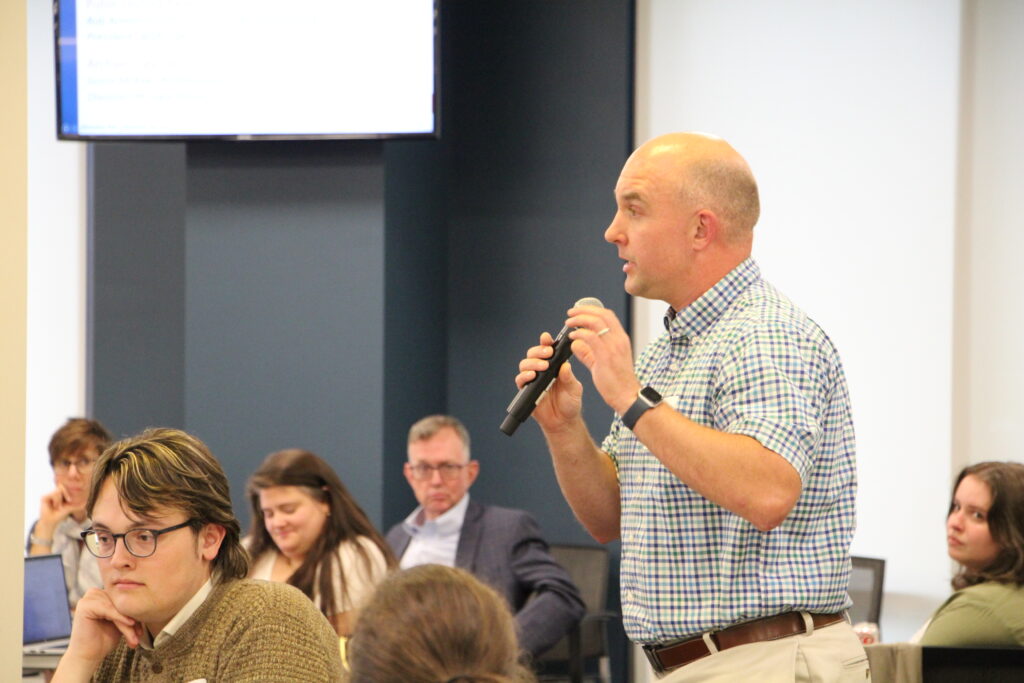
“It underscored the importance of meeting people in the field and understanding the kinds of training that will help them get those jobs,” said Dieterich-Ward.
Shippensburg University and its partners plan to continue to collaborate and organize future historic preservation summits, as well as other workforce development summits across a variety of fields.
“Shippensburg University is committed to working with employers to align education with workforce opportunities,” Dieterich-Ward highlighted. “The more we can engage with our partners and alumni across Pennsylvania, the stronger our pathways will be for students and for the preservation of history itself.”
